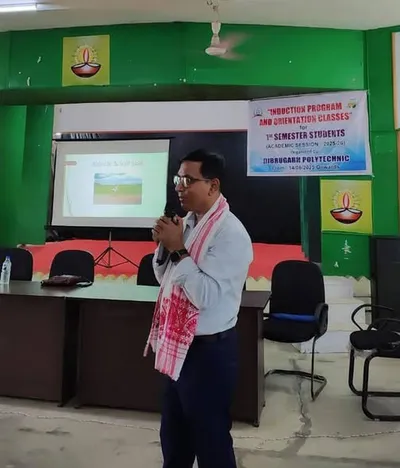
Here is something I see every semester at Dibrugarh University. Brilliant students — top marks, sharp technical skills — who freeze when they have to speak in a placement interview. Not because they lack knowledge. Because they cannot communicate it.
This problem is not about intelligence. It is about a gap that nobody taught them to bridge.
I have been Coordinator of the Soft Skill Development Cell at Dibrugarh University for years now, and if there is one thing I am certain of, it is this: technical knowledge gets you through the door. Communication is what determines how far you go once you are inside.
The communication gap in Northeast India
Let me be honest. Northeast India produces some of the finest professionals — engineers, doctors, researchers, entrepreneurs. But many of them struggle when they step into national or international settings. Not because they are not good enough. Because nobody taught them how to communicate across cultures, how to assert themselves without being aggressive, or how to network without feeling awkward.
I was one of them. When I first started attending conferences outside Assam, I would sit in the back row, too hesitant to speak. It took me years to understand that my silence was not humility — it was a barrier.
The four pillars I teach
1. Active Listening
Most people do not listen. They wait for their turn to talk.
Real listening — where you are fully present, hearing the words, reading the tone, catching the emotion behind the words — is rare. And it is powerful. When someone feels genuinely heard, trust builds instantly. I have seen negotiations transform, relationships heal, and teams gel, all because one person decided to actually listen.
Try this: in your next conversation, do not plan your response. Just listen. You will be amazed at how different the conversation becomes.
2. Clarity and Conciseness
I tell my students: complexity is easy. Clarity is hard.
Anyone can use big words and long sentences to sound intelligent. But the professionals who rise to the top are those who can explain a complex idea in simple language. Structure your thoughts before you speak. Cut the filler words. Say what you mean.
A student once asked me, “Sir, should I use English words to sound more professional?” I told him, “Use whatever language makes your point clearest. Clarity is professionalism.”
3. Assertive Expression
This is where many of my Northeast Indian students struggle. We are culturally conditioned to be modest, to not rock the boat, to defer to authority. These are beautiful qualities. But in a professional setting, they can become a liability.
Assertiveness is not aggression. It is expressing your thoughts, needs, and boundaries with confidence and respect. You can disagree with your boss and still be respectful. You can say “no” and still be kind. Learning this distinction changes careers.
4. Rapport Building
NLP taught me techniques for building instant connection with anyone — matching body language, mirroring speech patterns, finding common ground. These are particularly valuable when you are the only Northeast Indian in a Mumbai boardroom or a Bangalore startup. Misunderstandings happen across cultures. Rapport bridges the gap.
Daily exercises that actually work
Here is what I practise myself and recommend to every student:
- Record yourself speaking for 2 minutes on any topic. Then listen. You will hear your filler words, your pace, your weak spots. This alone is transformative.
- Stand in front of a mirror and speak. Maintain eye contact with yourself. It feels strange. Do it anyway.
- Read one article aloud every day. Not silently — aloud. This builds fluency and pronunciation.
- In every conversation, ask at least one open-ended question.
- Before responding, summarise what the other person said. “So what you are saying is…” This one habit alone will set you apart.
Digital communication matters too
Emails. Video calls. Professional messages. In today’s workplace, half your communication happens through a screen. Write clearly. Respond promptly. Proofread before sending. Your email is your first impression when you cannot be there in person.
One thing you can do right now
Start with listening. Today. In your very next meeting or conversation, resist the urge to formulate your response while the other person is speaking. Just listen. Fully. Notice how the quality of the entire interaction shifts.
Communication is not a gift. It is a skill. Every conversation is a practice session. Start treating it that way.
For related skills, explore Public Speaking Confidence and Emotional Intelligence at Work.