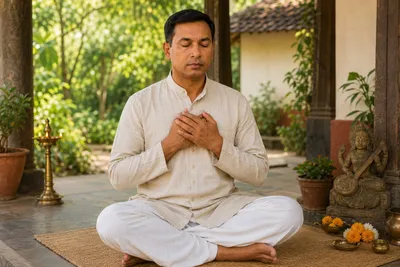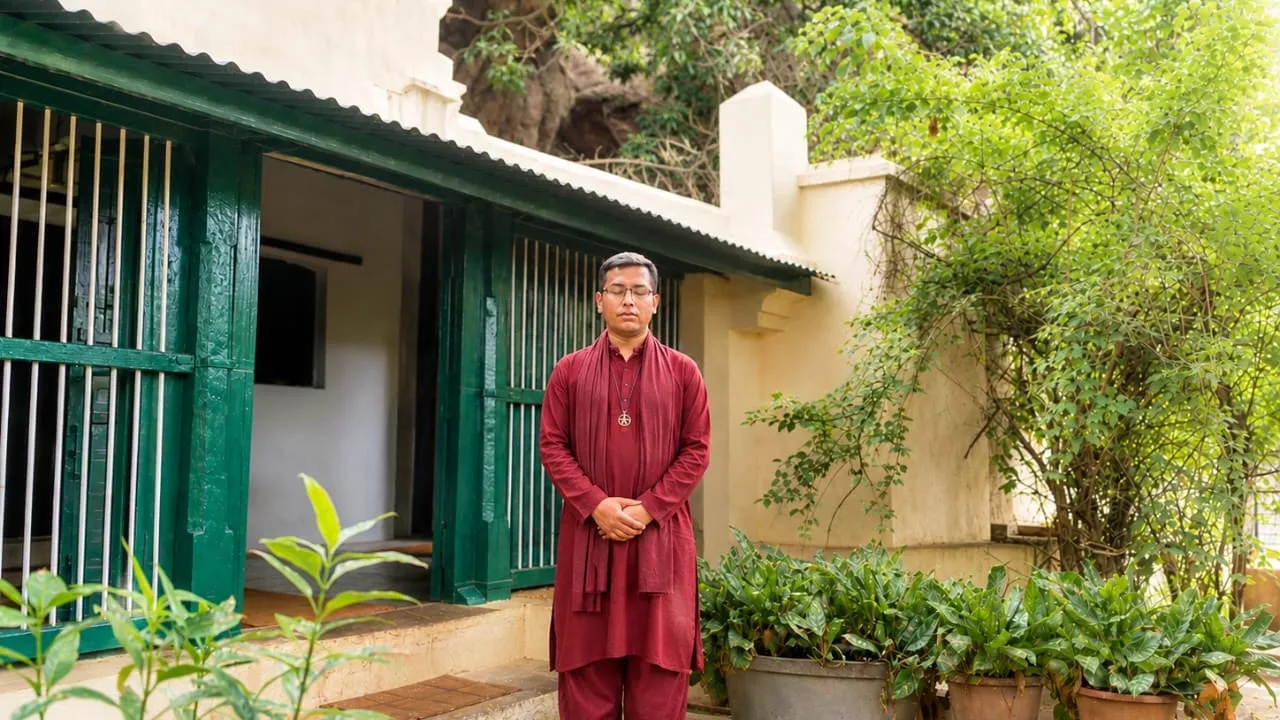
The first time I sat a Vipassana session seriously, I wanted to leave within an hour. My legs hurt. My mind was chaos. I was convinced I was the worst meditator in the history of meditation.
But something kept me there. A quiet sense that beneath all the noise, something important was happening. I was right. Vipassana has been the most transformative practice of my life.
What Vipassana means
The word comes from Pali and means “to see things as they really are.” Not as you wish they were. Not as you fear they might be. As they actually are, right now, in this moment.
This sounds simple. It is the hardest thing you will ever do. And the most freeing.
Vipassana is over 2,500 years old — taught by the Buddha himself. But it is not a religious practice. It is a method of self-observation. No beliefs required. No rituals. Just you, your body, and your awareness.
The three stages
Here is how I teach the practice through Hem’s Academy in Dibrugarh:
Stage 1: Samadhi — Building a Stable Mind
Before you can observe deeply, you need a mind that can hold still. This stage is about focusing on the breath at the nostrils, feeling the subtle sensation of air entering and leaving — until the mind becomes calm and steady.
This might take days. It might take weeks. It might take months. Do not rush it. A shaky foundation makes everything built on it unreliable.
Stage 2: Body Observation
With a stable mind, you begin scanning your body systematically. From the top of your head to the tips of your toes. You notice whatever is there: tingling, warmth, pressure, pain, itching, or sometimes nothing at all.
The content does not matter. What matters is that you are observing with full attention. You are training yourself to notice what is actually happening in your body, rather than what you think is happening.
Stage 3: Equanimous Observation: The Core of Vipassana
This is where the real work begins. You observe every sensation, pleasant, unpleasant, or neutral, with equal detachment. No craving the pleasant ones. No pushing away the unpleasant ones. Just observing.
This reveals something extraordinary: everything changes. Every sensation arises, persists briefly, and passes away. The pain in your knee? It shifts. The warmth in your chest? It fades. Nothing stays. Nothing at all.
Three truths you experience directly
Vipassana does not ask you to believe anything. It asks you to look. And when you look carefully enough, you discover:
- Impermanence (Anicca): Everything changes. Every thought, sensation, emotion — arising and passing. Always.
- Suffering (Dukkha): We suffer because we cling to what is impermanent. We try to hold onto what is already dissolving.
- Non-self (Anatta): What you call “self” is not a fixed thing. It is a constantly changing process. Thoughts, feelings, sensations — all arising and passing with no permanent “you” behind them.
These are not ideas to believe. They are realities to experience. Vipassana gives you the tool to see them for yourself.
What Vipassana gives you
From my own practice and from watching my students over the years:
- Stress reduction at the root level, not just managing stress, but dissolving its source
- Emotional balance that does not depend on circumstances
- Dramatically reduced reactivity to triggers
- A depth of self-understanding that no book can provide
- Greater compassion, naturally, not as an effort
- Freedom from habitual thought patterns that used to control you
Starting without a retreat
A 10-day residential course is the traditional way to learn Vipassana properly. If you can do one, I recommend it. It is intense, challenging, and deeply rewarding.
But you can begin exploring right now. Start with daily breath observation — Anapana — for 15-20 minutes. Focus on the sensation of breath at your nostrils. When your mind wanders, bring it back. Build that concentration first.
Once your focus stabilises — usually after a few weeks — begin scanning your body for sensations. Start from the top of your head. Move slowly downward. Observe whatever you find with equanimity.
This is how I start all my students at Dibrugarh University. Simple breath meditation first. Then the body. Then equanimity. Layer by layer.
What you will struggle with
Let me be honest about the hard parts:
- Restlessness: Your mind will rebel against being observed. It will produce every possible distraction. This is normal. Stay with it.
- Physical pain: Your legs will hurt. Your back will ache. Observe the pain as a sensation. Do not react. You will be amazed how often it transforms on its own.
- Drowsiness: If you keep falling asleep, take a few deep breaths or stand up briefly. Drowsiness is the mind’s escape strategy.
- Expectations: Do not come looking for lights, visions, or dramatic experiences. The most powerful insights in Vipassana are quiet. A slight shift in how you relate to a thought. A subtle loosening of an old reaction. That is where the transformation lives.
A lifelong practice
Vipassana is not a weekend project. It is a practice that deepens over months, years, decades. Each sitting reveals something new. Each insight opens a door to the next one.
The rewards — peace, clarity, freedom from the suffering you did not even know you were carrying — are worth every minute of practice. Every single minute.
For related exploration, read Why Meditation Is Not What You Think It Is and Inner Peace Through Advaita Vedanta.