When I started meditating, I thought it was about relaxation. Sit quietly, feel calm, reduce stress. That is what everyone told me. That is what the apps promised.
They were not wrong. But they were not telling the whole story.
After years of practice and teaching, I discovered that meditation has a purpose far deeper than stress relief. Stress relief is the side effect. The real purpose is something most people have never been told.
What Meditation Is Really For
Meditation is ultimately about self-realisation: discovering who you actually are, beneath the thoughts, the emotions, the personality, the story you have been telling yourself since childhood.
I know that sounds abstract. It is not. It is the most practical thing you will ever do. Because when you discover what you are beyond the mind, the mind stops running your life.
Beyond Feeling Good
Here is a distinction I wish someone had made for me early on: meditation is not about feeling good. It is about seeing clearly.
When you sit in meditation, you are not trying to stop thinking. You are learning to watch thoughts come and go without being controlled by them. You are developing the capacity to observe your own mind, its patterns, its habits, its tricks, without getting pulled into the drama.
This is the beginning of real freedom. Not freedom from difficult feelings. Freedom within them.
The software and the hardware
I use an analogy with my students at Dibrugarh University that seems to land well:
“Your mind is your software. Your pure Awareness is your hardware. The software runs programs: thoughts, beliefs, memories, reactions. The hardware is what runs the software. You have been identifying with the software your entire life. Meditation helps you recognise the hardware.”
You are not your thoughts. You are the awareness in which thoughts appear. This is not philosophy. It is something you can verify directly, right now, in your own experience.
That shift, from identifying with the mind to recognising the awareness behind the mind, transforms everything. Meditation stops being a relaxation technique and becomes a path of liberation.
How to Begin
You do not need special training for this. Start simply:
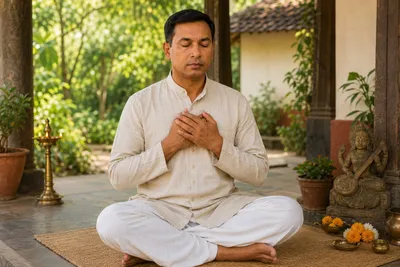
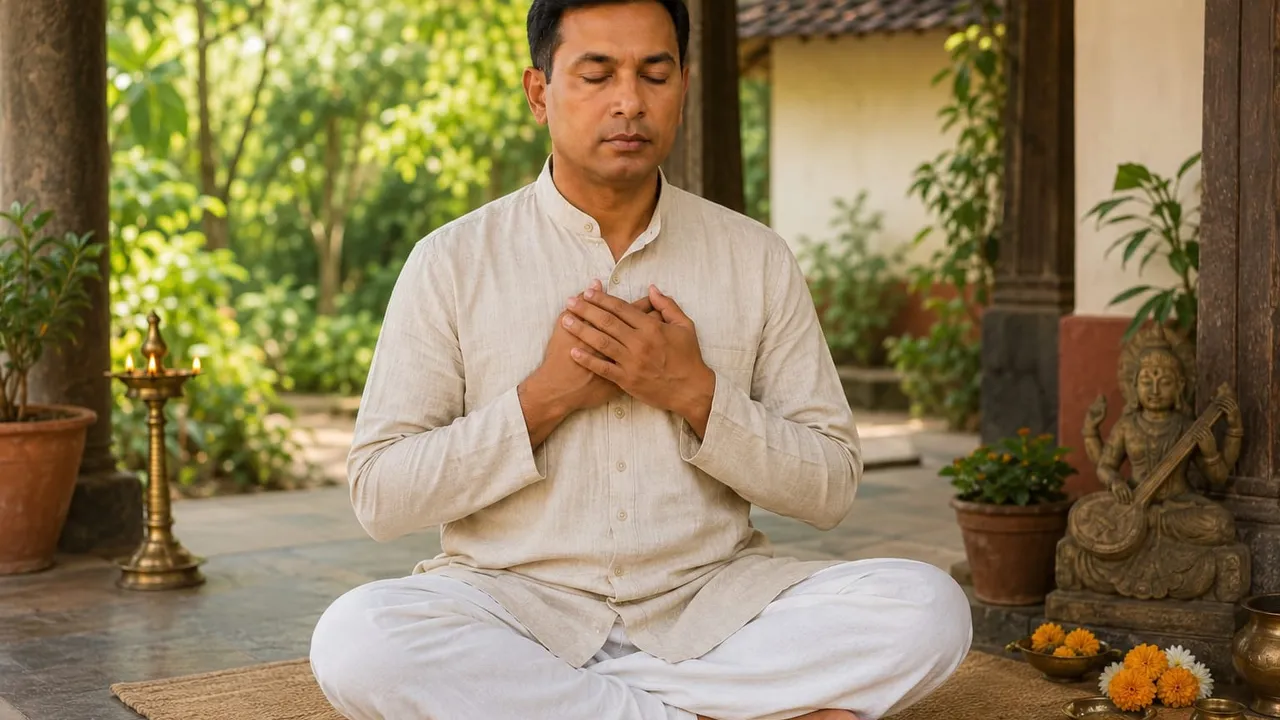
- Sit comfortably — any position that keeps you alert
- Close your eyes — turn attention inward
- Watch your breath — natural, no control
- Observe thoughts as they arise — do not engage. Just notice them passing.
- Rest in the awareness — the space in which thoughts appear and disappear
- Start with 10 minutes — increase as your practice deepens
The key is not to chase any particular experience. Just observe. What you are looking for is what is doing the looking.
The Real Journey
Meditation is not an escape from life. It is the art of waking up within it. As you deepen your practice, you will discover something remarkable: the peace you have been seeking was never outside you. It was always here, in the stillness beneath the noise of the mind.
You do not need to create it. You need to uncover it.