I grew up in Assam. I know what it feels like to look around and think, “People from here do not make it big.” I carried that belief for years. It shaped my choices, my ambitions, my willingness to try.
It was also completely wrong.
The challenge nobody talks about
Growing up in Assam — or anywhere in Northeast India — comes with invisible barriers. Not the obvious ones like infrastructure or connectivity. The quiet ones. The beliefs.
“People from small towns cannot compete with Delhi or Mumbai.” “Success is for others, not for us.” “Be modest. Do not aim too high.”
These messages come from love. Our families and communities want to protect us from disappointment. But protection can become a cage. I have seen it in student after student at Dibrugarh University, brilliant young people who do not even try because they have already decided they will not succeed.
The Assamese advantage
Here is what nobody tells you: Assamese culture gives you strengths that take urban professionals years to build.
Resilience. We grow up with floods, disruptions, and uncertainties, and we adapt. Community support. The Assamese instinct to help each other is rare in the cutthroat professional world. Respect for learning. Our culture values education deeply. Connection to nature. The Brahmaputra, the tea gardens, the hills. This connection to the natural world grounds you in ways that city life cannot.
These are not weaknesses. These are superpowers. The key is to blend them with modern success principles.
NLP reframing: changing the story
I wish someone had taught me NLP reframing when I was twenty. It would have saved me years of self-doubt.
The technique is direct. You identify a limiting belief, challenge it, and replace it with one that serves you:
- Write the belief down — exactly as it lives in your head. “People from Dibrugarh cannot compete nationally.”
- Question where it came from — who told you this? When did you start believing it? Is it even yours, or did you inherit it?
- Find counter-examples — who from a similar background has succeeded? They exist. They always exist.
- Rewrite the belief. “My background gives me a unique perspective that others value.”
- Repeat it daily, not as empty affirmation, but as a deliberate practice of changing your mental programming.
I had to do this work myself. My own limiting belief was that a teacher from Assam could not have national impact. I reframed it as: “My experience teaching in Assam gives me insights that urban educators lack.” That shift changed my career.
Daily habits that build a success mindset
- Spend 10 minutes each morning visualising your goals. See them clearly. Feel them.
- Read or listen to something that challenges your thinking every day. Even ten minutes.
- Find ambitious peers, locally and online. Your circle shapes your ceiling.
- Track progress weekly, not yearly. Small wins compound.
- Find a mentor. Someone who has walked a path you admire. Learn from their mistakes.
Education is changing
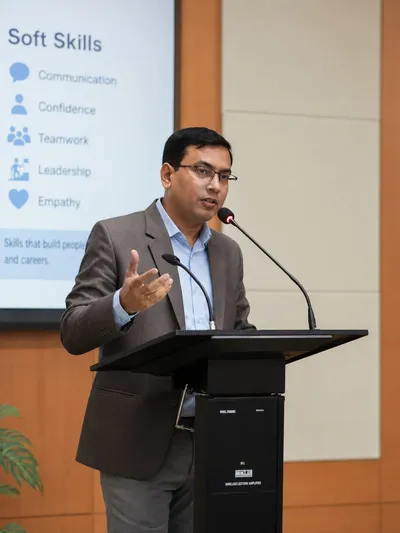
Dibrugarh University and institutions across Assam are shifting. Soft skills, communication, personality development. These are no longer afterthoughts. As Coordinator of the Soft Skill Development Cell at Dibrugarh University, I have watched students transform from passive, hesitant learners into confident professionals who compete nationally and win.
The infrastructure is catching up. The question is whether your mindset will catch up with it.
Start today
Not tomorrow. Not next week. Today.
Pick one belief that has been holding you back. Apply the reframing process. Then take one concrete action, however small, toward your goal.
I have watched hundreds of Assamese youth transform their lives. Not because they had advantages others lacked. Because they decided to rewrite the story they had been telling themselves.
You can do the same. Right now.
For deeper work on overcoming limiting patterns, explore Overcoming Failure with NLP Reframing and Building Unshakeable Confidence.