I want to approach this topic with care. Trauma is not a word I use lightly, and I am not a therapist. What I am is someone who has spent years helping people use EFT and Ho’oponopono as part of their healing journey, often alongside professional therapy, sometimes after therapy has ended, and occasionally for people who have never had access to formal mental health support.
What Trauma Does
Trauma changes how your nervous system works. A person who has experienced trauma may live in a state of constant alertness — scanning for danger, unable to relax, startled by sounds that others barely notice. Or they may go the other direction, numbing out, disconnecting, feeling nothing.
Both responses are the body’s way of protecting you. They served a purpose when the traumatic event was happening. The problem is that the body sometimes does not recognise when the danger has passed. It keeps running the old programme long after the event is over.
I have worked with people in Assam who experienced trauma from floods, accidents, loss, abuse, and the quiet, unnamed trauma of growing up in unsafe environments. Each person’s experience is different. What they share is the body’s tendency to hold on long after the mind has tried to move on.
How EFT Helps with Trauma
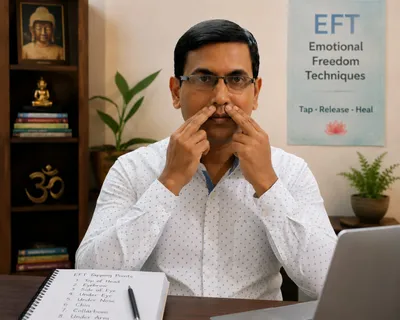
EFT works with the body’s energy system to release the emotional charge connected to traumatic memories. The process is gentle — you are not asked to relive the trauma in detail. You acknowledge it exists, rate its emotional intensity, and tap through the meridian points while holding the experience in awareness.
What happens is that the memory remains, but its emotional grip loosens. A woman I worked with had recurring nightmares about a car accident. After several EFT sessions, she told me, “I can still remember the accident clearly, but my body does not react to it anymore. It feels like it happened to someone else.” That is what release looks like.
For a detailed guide to the technique, see my EFT beginner’s guide and EFT for anxiety.
How Ho’oponopono Helps with Trauma
Ho’oponopono addresses the relational dimension of trauma — the guilt, shame, blame, and disconnection that often accompany it. The four phrases work at a deep level:
I am sorry. — For the suffering, not for causing it.
Please forgive me. — For the ways you have held onto pain.
Thank you. — For the healing that is happening.
I love you. — Reconnecting to the fundamental energy that trauma disrupted.
I have seen Ho’oponopono help people release intergenerational trauma, pain that was passed down through families without anyone naming it. A man from Jorhat told me he practised Ho’oponopono for his relationship with his father, and something shifted not just between them but in his relationship with his own children. The healing moved through the family line.
Read my posts on the power of Ho’oponopono and using Ho’oponopono for forgiveness for practical guidance.
Important Words
If you are carrying trauma, please know: you are not broken. You are having a normal response to abnormal circumstances. Healing is possible, but it does not have to happen all at once. Start small. Be gentle. Seek professional support when you need it.
EFT and Ho’oponopono are tools I trust. They have helped many people I have worked with. But they are part of a larger healing journey: one that also includes therapy, community support, patience, and self-compassion.
You survived the trauma. You will survive the healing too.